+91 78383 92593
Group Language Therapy
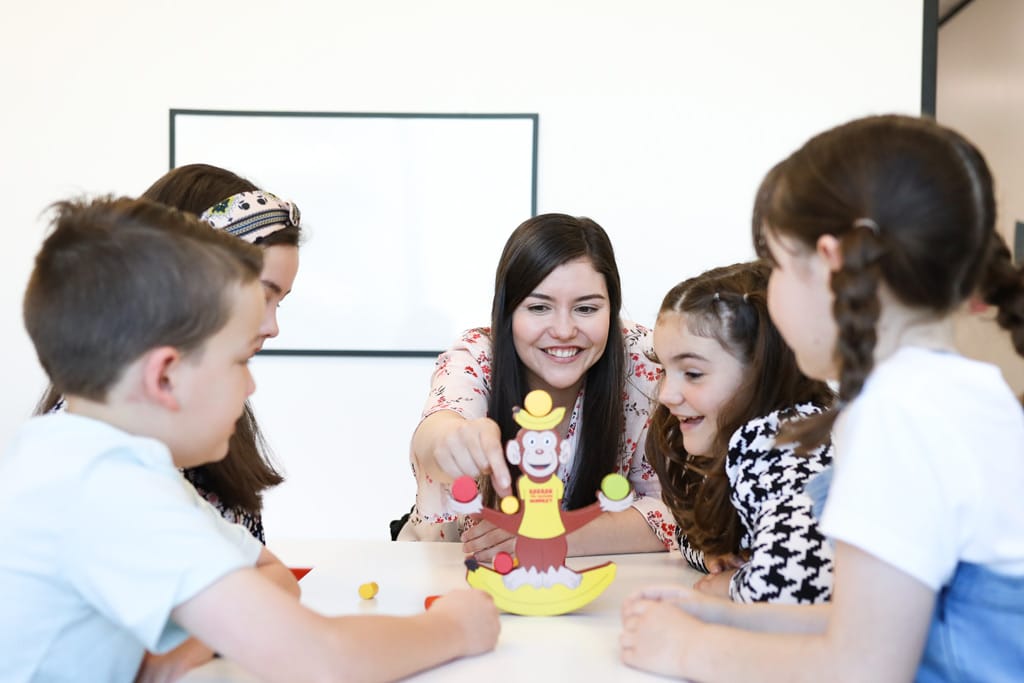
Group Language Therapy: Meaning, Causes, Benefits, and Treatment Process
Communication is one of the most important skills a person needs to live confidently and independently. Many children and adults face difficulties in speaking, understanding language, expressing thoughts, or interacting socially. These challenges may affect school performance, friendships, behavior, and overall confidence.
Group Language Therapy is a structured therapy program where individuals with similar communication needs participate in therapy sessions together under the guidance of a speech-language pathologist (SLP). It is one of the most effective therapy methods for improving language skills in a natural and interactive environment.
What is Group Language Therapy?
Group Language Therapy is a type of speech and language therapy conducted with a group of individuals rather than one-on-one sessions. Usually, the group consists of 2 to 8 participants, depending on their age and therapy goals.
The sessions are guided by a trained professional, such as a speech therapist, who creates activities that encourage communication, listening, interaction, and language learning among group members.
This therapy helps individuals practice real-life communication skills such as:
Taking turns in conversation
Listening and responding
Asking and answering questions
Using correct sentences
Improving vocabulary
Developing social skills
Learning how to communicate in a group setting
Group language therapy is commonly used for children with developmental delays, speech and language disorders, autism, ADHD, learning difficulties, and social communication issues.
Why Do Language Problems Happen? (Causes of Language Delay/Disorder)
Language problems can occur for many reasons, and they may be mild or severe depending on the individual.
1. Developmental Language Delay
Some children naturally take more time to develop speech and language skills. However, if the delay is significant compared to their age group, therapy becomes important.
2. Autism Spectrum Disorder (ASD)
Children with autism may struggle with social communication, understanding emotions, and using language properly in conversations.
3. Hearing Loss
Language development depends on hearing and listening. If a child cannot hear properly, their speech and language development can be delayed.
4. ADHD (Attention Deficit Hyperactivity Disorder)
Children with ADHD often face difficulty focusing, processing information, and organizing thoughts. This can affect language learning and communication skills.
5. Learning Disabilities
Some children struggle with comprehension, reading, or understanding instructions due to learning disorders, which affects language development.
6. Intellectual Disability
Individuals with intellectual disabilities may take longer to learn vocabulary, grammar, and communication skills.
7. Neurological Conditions
Conditions like stroke, brain injury, cerebral palsy, or developmental brain disorders can impact speech and language abilities.
8. Poor Social Interaction
Children who spend excessive time on screens or lack social interaction may not develop proper language and communication skills.
Signs That a Child May Need Group Language Therapy
Parents and teachers should observe if the child has difficulties such as:
Not speaking properly for their age
Trouble forming sentences
Poor vocabulary
Difficulty understanding instructions
Difficulty maintaining conversations
Not responding when spoken to
Poor eye contact or social interaction
Difficulty playing or talking with other children
Using gestures instead of words
Difficulty answering questions
If these symptoms are seen regularly, group language therapy can be a highly effective solution.
How Group Language Therapy Helps
Group therapy is especially helpful because it provides a natural environment where individuals learn from both the therapist and their peers.
1. Improves Social Communication Skills
One of the biggest benefits of group therapy is that it teaches communication in real situations. Participants learn how to:
Start conversations
Maintain topics
End conversations politely
Use greetings and polite words
Express feelings and emotions
Understand body language and facial expressions
2. Builds Confidence in Speaking
Many children feel shy or anxious in communication. When they see other children practicing language, they feel motivated and become more confident.
3. Encourages Peer Learning
Children learn quickly by observing others. In group sessions, children naturally learn:
New words
Sentence patterns
Correct pronunciation
Better conversation skills
4. Improves Listening and Attention
Group sessions teach children to listen carefully, wait for their turn, and focus on what others are saying.
5. Develops Turn-Taking and Sharing Skills
Many children with autism or ADHD struggle with turn-taking. Group therapy helps them learn how to wait, respond, and participate in a group conversation.
6. Enhances Vocabulary and Sentence Formation
Therapists use fun activities such as storytelling, games, picture discussions, role plays, and group tasks that improve vocabulary and sentence structure.
7. Supports Academic Language Development
For school-going children, group therapy also helps in developing skills like:
Understanding classroom instructions
Asking questions in class
Improving reading comprehension
Improving communication for learning
What Happens During Group Language Therapy Sessions?
Group language therapy sessions are designed to be interactive, fun, and goal-based. Every participant is given equal opportunity to participate.
Common therapy activities include:
1. Storytelling and Narration
Children are asked to listen to a story and answer questions. They may also create their own stories to improve imagination and sentence building.
2. Role Play and Pretend Play
Role plays such as “shopping,” “doctor visit,” or “school activities” help children learn real-life communication.
3. Group Games
Games like puzzles, board games, and interactive activities improve language learning in an enjoyable way. Children learn to follow rules, listen, and speak.
4. WH-Questions Practice
Therapists teach children to answer important questions such as:
What is this?
Where is it?
Who is doing it?
When did it happen?
Why did it happen?
How does it work?
5. Group Discussion Activities
Older children may participate in group discussions to improve conversation skills, expressing opinions, and speaking confidently.
6. Speech and Language Exercises
Therapists may use structured language exercises to improve grammar, sentence formation, and word usage.
How Group Therapy Fixes the Problem Over Time
Group therapy improves communication step by step through regular practice and repetition.
Step-by-Step Process
Assessment – The therapist evaluates each participant’s language level.
Group Formation – Individuals with similar age and language goals are placed together.
Goal Planning – Therapy goals are created such as vocabulary improvement, conversation skills, etc.
Weekly Sessions – Regular sessions begin with planned activities.
Progress Tracking – The therapist monitors improvements.
Home Practice Guidance – Parents are given activities for home practice.
Improved Communication Skills – Over time, the child becomes confident and improves speech and language ability.
Benefits of Group Language Therapy
Group language therapy provides multiple long-term benefits such as:
Improved communication skills
Better social interaction and friendships
Stronger confidence and self-esteem
Better classroom participation
Reduced anxiety in public speaking
Improved listening and attention
Better teamwork and behavior skills
Role of Parents in Group Language Therapy
Parents play an important role in therapy success. Therapy results improve faster when parents practice at home.
Parents can help by:
Encouraging daily conversation
Reading storybooks
Asking questions and listening patiently
Reducing screen time
Supporting group play activities with other children
Practicing therapist-recommended exercises
Conclusion
Group Language Therapy is a powerful and effective approach for improving communication skills in children and adults. It helps individuals develop vocabulary, grammar, listening, conversation, and social interaction skills in a supportive group environment. Language problems can happen due to developmental delays, autism, ADHD, hearing loss, neurological issues, or limited interaction.
With consistent therapy sessions and home practice, individuals can significantly improve their communication abilities, gain confidence, and become more socially active and independent. Group language therapy not only improves speech and language but also helps in emotional development, social bonding, and better learning outcomes.
We provide expert speech and occupational therapy to help children and adults improve communication, motor skills, and independence.
Useful Links
Subscribe Now
Don’t miss our future updates! Get Subscribed Today!
©2026. Growth Burner. All Rights Reserved.